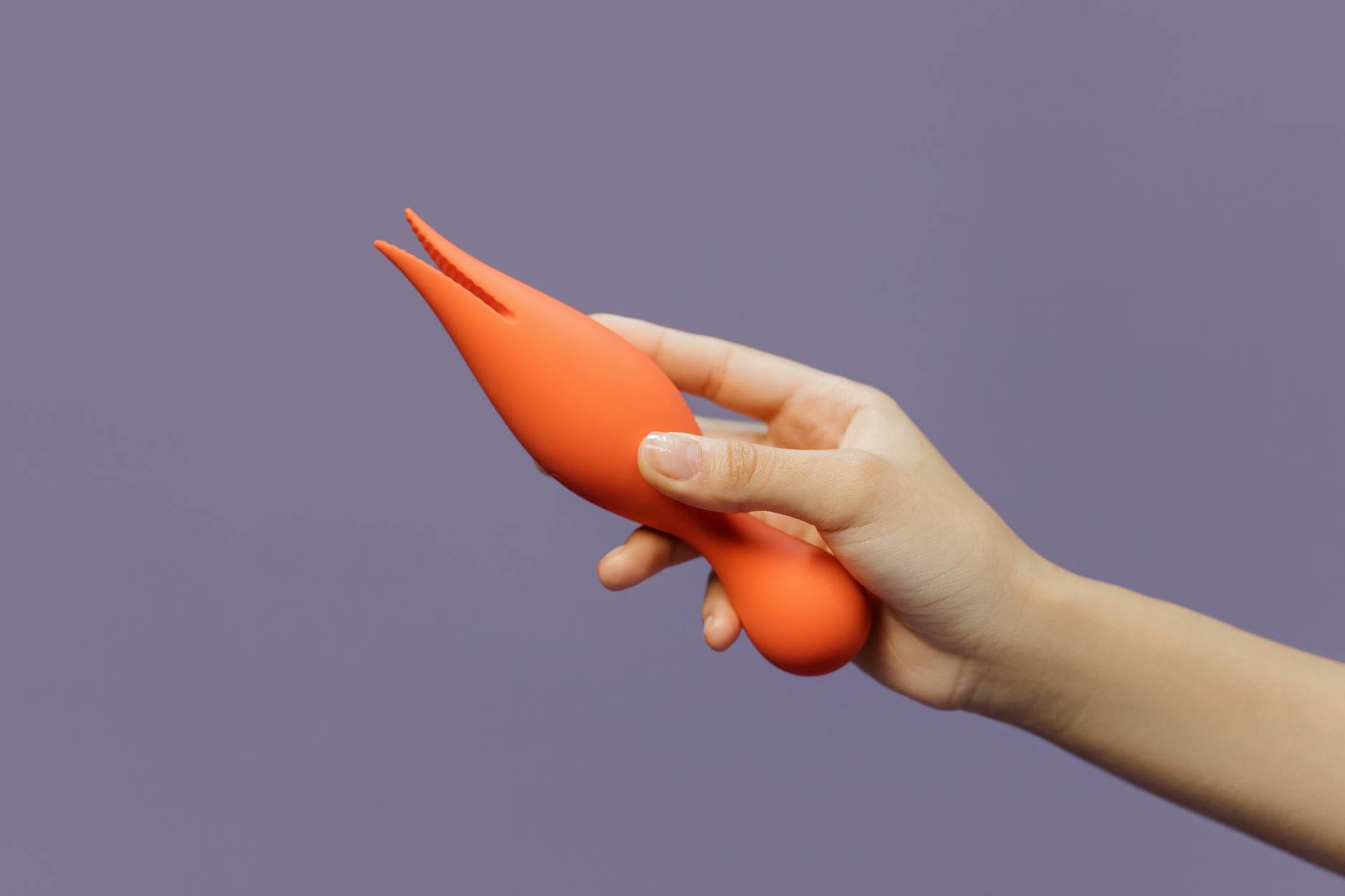
Why Lemon Vibrators Work Differently When You're in Your Early Thirties
Your thirties rewrite the pleasure rulebook. Hormones shift, arousal changes pace, and what worked in your twenties might feel completely different. Here's what's actually happening and how to work with it.
Here's what nobody tells you: your sexual response shifts more in your thirties than it did between sixteen and twenty-five. The changes are subtle enough that you might not notice them consciously, but they're real. Your arousal doesn't work on the same timeline anymore. Your body has different tolerances. What felt incredible at twenty-six might feel underwhelming now, not because you're broken, but because you've actually evolved.
This is why so many people find that a lemon clitoral vibrator works better in their thirties than it did before. It's not the vibrator that changed. You did.
In your twenties, estrogen and testosterone follow a fairly predictable monthly cycle. In your early thirties, something quieter starts happening. Estrogen levels don't drop dramatically, but they do begin a slow decline. At the same time, progesterone becomes less stable. The gap between your peak fertile window and your low-energy days widens.
This matters for pleasure because estrogen directly affects vaginal lubrication, blood flow to the clitoris, and how quickly your nervous system registers touch. In your twenties, you probably could get aroused in five minutes, anytime, anywhere. By thirty-two or thirty-three, you might need ten or fifteen. That's not dysfunction. That's physiology.
Your thirties also bring something that rarely gets discussed: a shift in what turns you on mentally. In your twenties, novelty and intensity dominate. By thirty, context and intimacy start mattering more. You might find yourself less responsive to a random hookup or someone you're not emotionally connected to, even if they're conventionally attractive. Again, not broken. Wired differently.
One of the most common things I hear from people in their early thirties is this: "I need more time to get going, but once I do, it's intense." That's a textbook thirties pattern.
Your clitoral sensitivity in your twenties was reactive. A particular touch, a particular rhythm, and boom, you were halfway there. In your thirties, you might need a longer buildup, but the payoff is often more sustained and deeper. It's the difference between a lightning strike and a slow burn.
This is where lemon vibrators and other clitoral vibrators genuinely shine for this age group. Unlike penetrative stimulation, which relies on partner timing and arousal synchronization, a lemon sucker or vibrator lets you control the entire arc. You set the pace. You decide when intensity ramps up. And because you know your own body better now, you can use that control deliberately.
One thing that catches people off guard in their thirties is that orgasms often get stronger, but sometimes they're harder to access. This is backwards from what the culture tells you should happen. You're supposed to peak at twenty-five, right? Wrong.
What's actually happening: your nervous system is maturing. You're less easily distracted by the wrong stimulation. You need the right stimulation. Your orgasms, when they happen, often involve more of your body. They take longer to build but feel richer and more full-body when they arrive.
Lemon vibrators work particularly well for this pattern because they're precise. A lemon clitoral vibrator doesn't just vibrate everywhere. It concentrates stimulation on the area that actually needs it. For someone in their thirties with a more developed sense of what they need, that specificity is gold.
In your thirties, you're likely carrying more mental load than you did in your twenties. Relationship dynamics shift. Career pressure increases. If you're juggling a partner, maybe kids, maybe aging parents, your nervous system is simply working harder just to keep things together.
This matters for pleasure because arousal requires your nervous system to shift from sympathetic (fight-or-flight) to parasympathetic (rest-and-digest) mode. In your twenties, that shift might have taken thirty seconds. In your thirties, it might take fifteen minutes. Some people find they need to actively clear their head before sex feels good. Others notice they need a partner who understands this shift and doesn't treat a slower warm-up as rejection.
This is also where having control matters. If you're using a lemon vibrator alone, you're not managing anyone else's expectations or timeline. You can take the forty-five minutes you need without explaining it. You can stop and start. You can build toward something rather than performing on command.
Fluids in your twenties? Probably abundant and quick. In your thirties? It depends. Some people report less natural lubrication, especially in the days right after ovulation. Some report more sensitivity to condoms or barrier methods. Some notice that their body is pickier about what feels good going in.
None of this affects your clitoral response. The clitoris doesn't care about hormonal fluctuations the way the vagina does. But if you're using a lemon vibrator and noticing it feels different than it used to, especially if it feels dry or slightly irritated, that's often about shifting vaginal lubrication patterns, not about the toy or your body failing.
Water-based lube stays your friend. But in your thirties, you might find yourself using it more consistently, even in situations where you didn't need it before. That's normal. Plan for it.
Compared to wand vibrators or other toys, a lemon vibrator's design works particularly well for thirties-era arousal patterns. The shape fits different body positions. The intensity options let you start at a lower setting and build gradually. The precision of the stimulation means you're not wasting energy on indirect contact.
Many people in their thirties also report that the suction technology in lemon vibrators feels different than traditional vibration. It's less agitating to tissue that's becoming slightly more sensitive, but paradoxically more effective at generating arousal. Some people describe it as feeling almost closer to manual stimulation, which makes sense for an age group that's increasingly drawn to intimacy over novelty.
If you're exploring a lem vibrator for the first time in your thirties, start with lower settings. Your baseline sensitivity might be lower than it was before, but your maximum capacity for sensation is often higher. That's a useful distinction. It means you're not numb. You're just more discerning.
If you're partnered, your thirties are the time to actually talk about this stuff. Your partner probably noticed the changes too. Maybe they thought it meant something was wrong. Maybe they adjusted without mentioning it. Either way, having a real conversation about how you've both changed is actually relationship gold.
This is also a moment where introducing a lemon vibrator to partnered sex becomes less loaded. In your twenties, a toy might have felt threatening, like evidence that your partner wasn't enough. By thirty, many people get that a toy is just a tool. A lemon clitoral vibrator during partnered sex isn't competition. It's often the thing that makes shared pleasure easier for both of you.
You might also find that in your thirties, you're more interested in using a vibrator alone. Not instead of partnered sex, but in addition to it. Your self-knowledge is sharper. Your sense of what you need is clearer. Spending time with yourself, learning your own arousal patterns more deeply, actually makes partnered sex better.
This is the least discussed but most important shift. In your twenties, you might not have been entirely sure what you liked. You were still figuring it out. By thirty, most people have a much clearer sense.
You probably know whether you like pressure or feather-touch. Whether you need slow builds or can jump right in. Whether you prefer consistency or variety. Whether you like your clitoris touched directly or prefer indirect stimulation through the hood.
All of this knowledge translates directly to using a lemon vibrator more effectively. You're not experimenting to find something that works. You're using something that works to deepen what you already know. That efficiency, that sense of knowing what you want, is genuinely one of the best things about thirties sexuality.
If you've been using the same vibrator the same way since your twenties and it stopped working, that's useful information. Your body might genuinely need something different now. You might benefit from exploring how a lemon sucker works differently than a traditional vibrator, especially if you're noticing changes in sensitivity.
You might also find that intensity tolerance changes as hormones shift, meaning what felt perfect at twenty-six now feels either too mild or overwhelming. In your thirties, you deserve a tool that matches your current body, not your former one.
The good news is that most people find their pleasure deepens in their thirties, not diminishes. You're not losing capacity. You're gaining specificity. Your lemon vibrator isn't something you've outgrown. It's something that finally makes sense.
Hormonal shifts in your thirties mean estrogen and blood flow to your clitoris follow a different timeline. This is completely normal and happens to most people. It doesn't mean you're less responsive. Your nervous system simply requires a longer ramp-up. Some people find this is actually better because the buildup creates deeper sensation.
Absolutely. Vaginal lubrication patterns shift throughout your life, especially in your thirties as hormones become more variable. This doesn't mean anything is wrong. Many people find that having good water-based lube available makes everything feel better and removes pressure to self-lubricate on command. It's a practical adjustment, not a sign of dysfunction.
Not necessarily. What changes is often what stimulation feels good, not the clitoris's ability to respond. Many people report that they're actually more sensitive in their thirties but to different types of touch. Pressure, rhythm, and specificity matter more. A lemon vibrator's precision often feels more satisfying now than in your twenties.
Most people do experience some shift in their thirties, though the specific changes vary. Some notice arousal takes longer. Some notice their orgasms feel different. Some notice their preferences shift. If you're noticing changes, you're in completely normal territory. The fact that culture doesn't talk about this much doesn't mean it's not happening to almost everyone.
Not necessarily, but it's worth experimenting if what you used before feels off now. Some people find that a lemon clitoral vibrator works better at this age than traditional vibrators. Others just adjust the way they use what they already have. The best approach is to stay curious rather than assuming something is broken.
Not at all. In your thirties, knowing your own body becomes even more valuable. Using a lemon vibrator or other toys alone is a way to deepen that self-knowledge. It makes partnered sex better, not worse. You're learning what you actually need rather than performing what you think you should want.
The changes happening in your early thirties might feel subtle, but they're laying the groundwork for a much richer sexual life in your forties and beyond. You're not past your prime. You're actually entering it. Your body is becoming more honest about what it needs. Your mind is catching up to that honesty.