Let's name what's actually happening
Your body used to respond one way. Now it doesn't. Maybe touch that felt electric six months ago feels muffled. Maybe you used to come easily and now it's like trying to reach someone through thick glass. Maybe sensation is there but it's unpredictable, flickering on and off without warning. That's not dysfunction. That's your nervous system doing exactly what it's designed to do when something has shifted, whether that's stress, medication, relationship change, or just the cumulative weight of a year you didn't expect.
The good news: your body isn't broken, and clitoral vibrators like the lemon vibrator are one of the most effective ways to rebuild sensation safely and without force.
Why touch feels different in the first place
Touch sensitivity is regulated by your nervous system, not just your anatomy. When you're stressed, grieving, anxious, or processing trauma, your nervous system literally dampens sensation. It's a protective reflex. Imagine your clitoris as a volume dial. Under threat or overwhelm, that dial gets turned down automatically. No willpower can override it.
Medication is another common culprit. Antidepressants, blood pressure meds, and antihistamines can all muffle sensation. Hormonal changes do it too. Even a new relationship, oddly enough, can flatten sensation for the first month or two because your nervous system is still assessing whether this person is safe.
Here's the kicker: trying to force sensation back through more intense touch usually backfires. It's like turning up the volume on a broken speaker. You get noise, not music.
How vibration works when regular touch doesn't
Vibration bypasses some of the nervous system's filtering. Instead of relying on subtle pressure receptors that may be dampened, vibration directly stimulates the nerves under the skin at a frequency they can't ignore. It's not about intensity. It's about a specific type of input your system can process more easily right now.
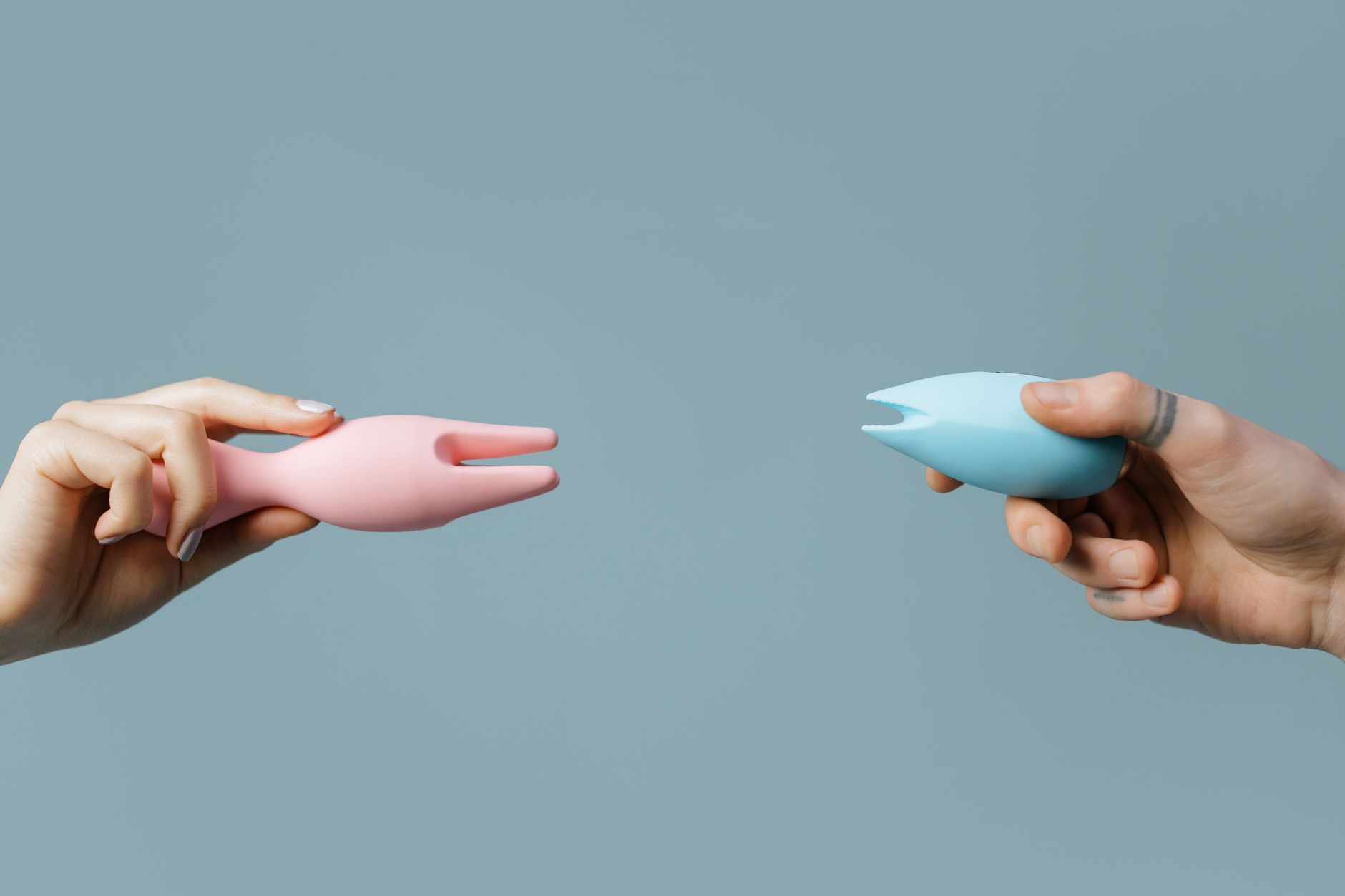
A lemon vibrator, or any clitoral vibrator, works through air-suction stimulation combined with micro-vibrations. This dual action does something regular touch can't: it creates sustained, consistent input that gradually retrains your nervous system to recognize and respond to sensation. Over time, you become more sensitive, not less. Your dial moves back up.
The suction element is particularly effective when sensation feels numb or distant. It's more pronounced than vibration alone, which means it has a better chance of breaking through the static.
The protocol that actually works
Start with zero pressure to perform. This is the most important part. If you're approaching a vibrator thinking "I need to come," you've already activated the part of your nervous system that dampens sensation. Instead, frame it as exploration. Data gathering. What happens if I try this for five minutes with no goal?
First session (days 1-3): Use your lemon clitoral vibrator on the lowest setting for 5-10 minutes, once daily. Don't aim for anything. Just notice. Where does it feel like something? Where does it feel like nothing? Is there a pattern? Write it down. Your brain needs data before it can rewire.
Second phase (days 4-10): Same routine, but start paying attention to micro-sensations. Not orgasm or intense pleasure. I mean: does the sensation feel closer to the surface or deeper? Does it feel sharp or dull? Warm or cool? Is there any moment where you go from muted to slightly less muted? Even 5 percent counts.
Third phase (days 11-20): Gradually increase time to 15-20 minutes. Try patterns 2 and 3 on your vibrator, but only if pattern 1 feels like "old news." Don't jump settings just to chase feeling. You're not racing.
Month two onward: By now, most people report a noticeable shift. Sensation becomes more predictable. The nervous system has started lowering its guard. This is when many people naturally discover they can come again, or come differently than before.
When you're with a partner (managing expectations)
If you're in a relationship and your partner doesn't understand why you suddenly need a vibrator, the conversation is rarely about the toy. It's about your nervous system, and it deserves the same respect as any other health shift. Here's what I tell my clients to say:
"My body is processing something right now, and my nervous system has dampened sensation. It's not about you or attraction. I'm using a vibrator to help reset that, and it works faster than anything else. This is temporary." Usually, it's true.
Where couples get stuck is when the partner feels replaced. They're not. A vibrator is a tool for retraining your nervous system. It doesn't do what a hand does. It doesn't replace intimacy. It makes it possible again.
When sensation returns (and what it feels like)
Reclaimed sensation rarely feels like it did before. That's okay. Sometimes it feels sharper. Sometimes more diffuse. Sometimes you come in ways you never have. Some people report that they can feel more subtle touch now, not just intense sensation. Others find that the recovery process teaches them something new about what they actually want.
The timeline varies wildly. Two weeks for some people. Three months for others. Depends on your nervous system, what triggered the dampening, and whether that trigger is still active. If you're still in a stressful situation, this goes slower. Not slower as punishment. Slower because your nervous system is still protecting you.
What not to do (so you don't make it worse)
Don't assume you're broken if sensation doesn't snap back in a week. Don't jump to the highest setting hoping to "shock" your system awake. That hardens defenses, not softens them. Don't compare your timeline to anyone else's. Your nervous system isn't fast or slow. It's just your nervous system.
Don't use a vibrator as punishment ("I should be able to come normally"). Shame slams sensation back down. You're using this tool because it's smart, and your body deserves support.
Finally, don't ignore it if nothing shifts after two months. That's a signal to check in with a doctor. Most sensitivity changes are functional and fixable. Some aren't. Either way, you deserve an answer.
The part no one tells you
Lemon vibrators, and clitoral vibrators in general, often feel better once sensation has been rebuilt. Your nervous system learns to recognize the pattern. The stimulation becomes not just functional but genuinely pleasurable. Many people who rebuild sensation this way report that their most satisfying experiences come after this recovery period, not before. Your body learned something about itself.
That's not just repair. That's wisdom.
FAQs
How long before I feel a difference with a lemon vibrator?
Most people notice some shift in sensitivity within 2-3 weeks of consistent daily use. But "shift" might just mean sensation feels slightly closer to the surface, not a full return to before. Real recalibration usually takes 4-8 weeks. If you hit week 8 with zero change, check in with a doctor. It's worth ruling out medication side effects or other physiological factors.
Can I use a lemon clitoral vibrator if I'm on antidepressants?
Absolutely. In fact, if antidepressants are dampening sensation, a vibrator is one of the most direct ways to work around that. The medication isn't going anywhere, so using a tool that bypasses the numbness is practical. Talk to your doctor if the dampening is severe. Sometimes switching medications or adjusting timing helps. A vibrator and a medication conversation aren't either-or.
What if vibration feels too intense when sensation is muted?
Start at the absolute lowest setting. If even pattern 1 feels sharp or uncomfortable, your nervous system might need more time before it's ready to accept vibration. Try pattern 1 for just 2-3 minutes instead of 10. Or use it through clothing first, which creates a buffer. The goal is finding the threshold where stimulation registers as interesting, not invasive.
Does using a lemon vibrator mean I won't be able to come without it?
No. The opposite. You're using it to retrain your nervous system, not to depend on it. Once sensation returns, many people find they have more options, not fewer. Some still prefer vibrator sensation. Some don't. Both are fine.
Is there a difference between a lemon sucker and other clitoral vibrators for rebuilt sensation?
The suction element in a lemon vibrator makes it particularly effective for numb sensation because the stimulation is more pronounced. But any quality clitoral vibrator can work. The key is consistency, not the brand. That said, if you're starting from a place of significant numbness, suction gives you a better edge.
What if my partner thinks I'm using a vibrator because they're not enough?
This is a relationship conversation, not a vibrator problem. I'd recommend being direct: "My nervous system has dampened, which isn't about you. This tool helps reset that. I'm not replacing you. I'm building capacity to feel you again." If your partner struggles with that, couples therapy can help him understand why support matters more than ego here.
When your body responds differently to touch, the instinct is usually to panic or force your way back. Neither works. Vibration, patience, and the right tool (like a lemon vibrator or any clitoral vibrator) work together to help your nervous system remember what sensation feels like. That's not weakness. That's biomechanics.
Your pleasure matters. And so does the path back to it.
If sensitivity shifts persist or worsen, reach out to a pelvic health specialist or your GP. And if you want to explore this more deeply, <a href="/contact">get in touch</a> to talk through what's happening in your specific situation.