
When desire finally knocks again
You've spent years with no interest. No spark. No "oh, I want to." Maybe stress killed it. Maybe depression or grief or burnout. Maybe a relationship shift left you numb. Then one day, something shifts. You feel a flutter. A thought that lingers instead of disappearing immediately. Desire is trying to wake up again, and you have no idea what to do with it.
This is actually harder than you might think. After a long dry spell, your body has forgotten how to respond. Your nervous system has learned to stay still. And if you jump back in too hard, too fast, you can shut it down again just as quickly. I see this happen constantly in my practice. People are so relieved desire is returning that they push it, and then it disappears for another year.
The right approach is slower, more curious, less goal-oriented. Lemon vibrators designed like the clitoral vibrators from My Lem Toy are particularly helpful here because they let you rebuild sensation gradually, without the penetrative pressure that can feel overwhelming after a long absence. Here's how to use them when you're coming back to pleasure after a long hiatus.
Understanding what happens to sensation after a long dry spell
When you haven't engaged sexually or sensorially for months or years, two things occur simultaneously. Your neural pathways for pleasure are still intact. Your clitoris hasn't lost function. But your nervous system has adapted to the absence. It's like a muscle that hasn't been used. It doesn't forget how to work. It just needs reminding.
Additionally, the anticipation of failure can create a protective numbness. You might feel a flicker of interest, then immediately think "this won't work anyway" and mentally back away. This is your system trying to protect you from disappointment. It's functional, but it's also the thing keeping desire locked down.
Using a lemon clitoral vibrator (sometimes called a lemon sucker because of how the air-suction mechanism works) is useful here because the sensation is different from what you might remember. It's not a traditional vibration. It's a rhythmic suction that feels more like stimulation than stimulation. This novelty can bypass the "this won't work" story your brain is telling.
Start with zero expectations beyond curiosity
This is the part most people skip, and it's why they fail. Before you use any sex toy, before you even think about orgasm or pleasure, establish that the goal is just sensation. Not arousal. Not orgasm. Just noticing what your body feels like when something is happening.
Pick a time when you're genuinely alone, not rushed, and ideally after you've been resting (not after a stressful day where your nervous system is still flooded with cortisol). Start fully clothed, if you want. Hold your Lem vibrator. Turn it on the lowest setting. Touch it to your inner arm. Feel the sensation without any narrative about what it "should" do or what you "should" feel.
This sounds silly. It's not. You're retraining your system to notice pleasure without demanding it produce anything. That's the whole game.
The rebuilding sequence
Once you're okay with the sensation of the tool itself, here's the progression I recommend to most clients:
Week one: External exploration. Use your lemon vibrator on your labia, thighs, and the outer edges of your vulva. Keep clothes on if that feels safer. You're not trying to access the clitoris yet. You're just remapping the geography of sensation. Spend 5-10 minutes. Stop before you feel any pressure to "achieve" something. This consistency matters more than intensity.
Week two: Slow approach. Now move toward the clitoris, but stay on the gentler patterns (settings 1-3 on your Lem device). Touch down for 30 seconds, pull away for a minute. This on-off rhythm actually builds arousal more effectively than continuous stimulation when you're reawakening, because it prevents desensitization and keeps your nervous system engaged.
Week three: Steady rhythm. Find the pattern and setting that feels best. Stick with it for 10-15 minutes. Notice if anything shifts. You might not orgasm. That's fine. The goal is still sensation and gradual nervous system recalibration.
Week four and beyond: Permission to explore. Once your body starts responding again (which might be increased wetness, increased engorgement, or actually pleasurable sensation), you can start experimenting with intensity and rhythm. But keep a soft hand on the intensity dial. It's easy to overdo it after a long absence and crash back into numbness.
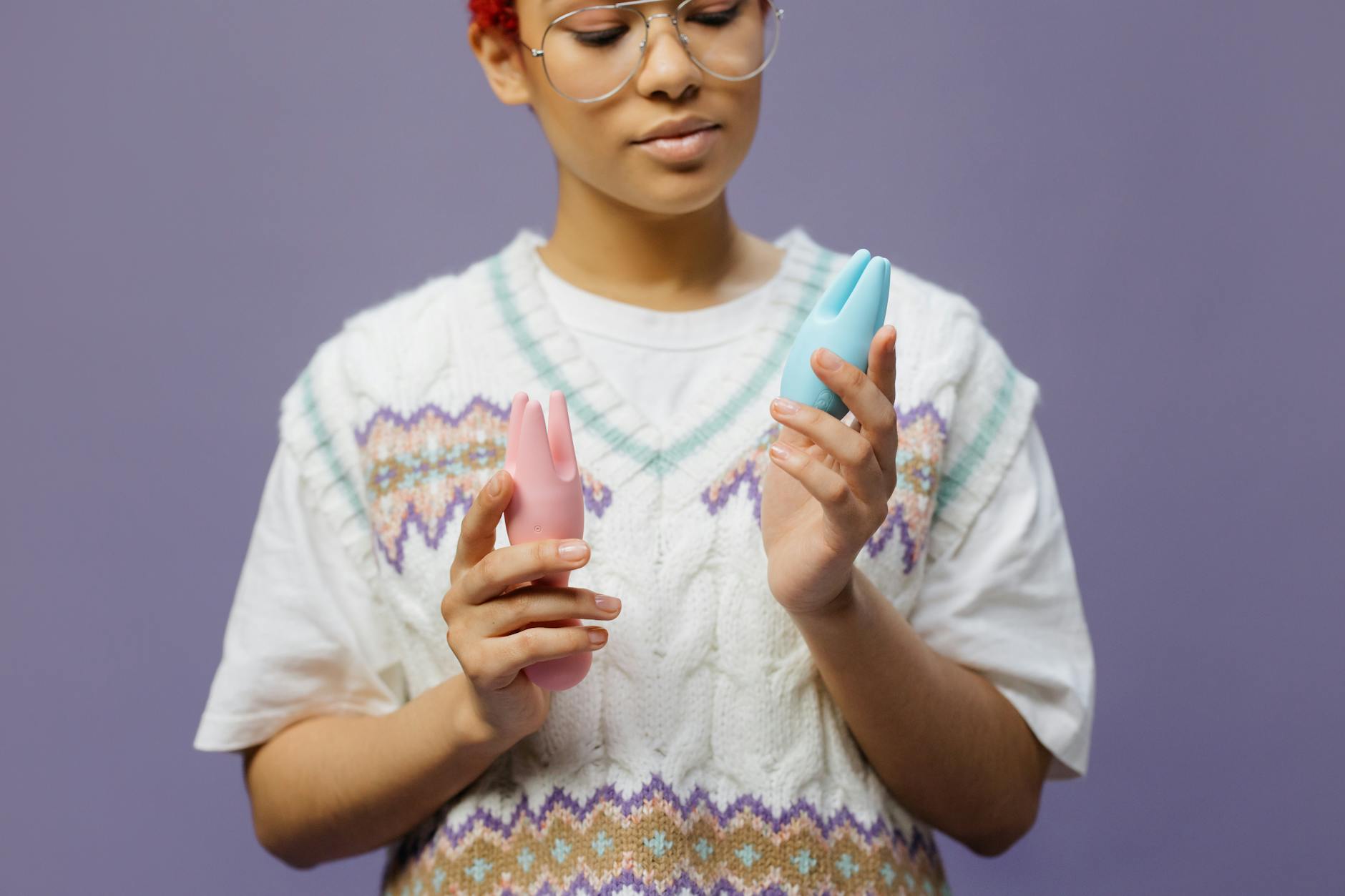
Photo by cottonbro studio on Pexels
What to do if numbness persists
Sometimes you follow this sequence perfectly and nothing happens. No sensation. No shift. This is worth investigating, because it often signals something deeper than just nervous system adaptation.
Depression, anxiety medications, hormonal changes, unresolved trauma, or chronic stress can all numb pleasure response even when you want it back. A lemon clitoral vibrator isn't going to solve those things. You might need to talk to a doctor about medication adjustment. You might need therapy to process what created the low-libido period in the first place. You might need to address stress or relationship dynamics that are still actively suppressing desire.
The tool helps when the barrier is purely physical deconditioning. It doesn't fix systemic issues. Know the difference. If numbness persists after 4-6 weeks of consistent, patient use, that's worth talking to a therapist or GP about.
If you have a partner, the conversation is separate
Honestly, this is where most couples mess it up. They start using tools to rebuild solo sensation, but they're carrying all this unspoken pressure about getting back to partnered sex. Then they're using the lemon vibrator to try to prove to their partner that desire is "back," rather than to gently wake their own body up.
Here's the reality: if you're rebuilding after years of low libido, your partner needs to understand that this is your nervous system rewiring itself. It's not about them. It's not about your attraction to them (or lack thereof). It's about your body remembering how to feel pleasure in general. Until that happens, bringing them into the process usually slows it down.
The conversation to have early is: "I'm starting to feel some desire returning. I'm going to spend some time alone exploring sensation so my body remembers what that feels like. This isn't about you. In a few weeks, once I feel more grounded, we can talk about what comes next." That clarity protects both of you.
The patience piece (the hardest part)
After months or years without sexual interest, it's easy to get frustrated when your body doesn't immediately respond. You might use your lemon vibrator once or twice, feel nothing, and assume it's broken or you're broken.
Neither is true. Rewiring a nervous system that's been dormant takes time. Sometimes 3-4 weeks. Sometimes 8-12 weeks. The length depends on what caused the low libido in the first place and whether those conditions have actually shifted.
The best predictor of success isn't the quality of the tool. It's consistency and self-compassion. Show up regularly. Pay attention to small shifts. Don't demand orgasm. Don't perform for an imaginary audience. Just notice what your body is saying.
Most people who stick with this process report that desire doesn't just return. It returns differently. Slower to build, but often more stable. Less reactive to external pressure. More genuinely theirs. That's actually better than what came before.
People also ask
How long does it typically take for libido to return after a long period of no sexual interest?
It varies, but most people notice a shift within 3-6 weeks of consistent, low-pressure exploration. That doesn't mean full desire or frequent orgasms. It means your nervous system starts recognizing and responding to sensation again. Real libido recovery, where desire feels natural and spontaneous, often takes 2-3 months. The timeline depends heavily on whether the original cause of low libido has been addressed. If you're still in a stressful job, an unhappy relationship, or on a medication that kills desire, your body won't rewire quickly. It's protecting you.
Can lemon vibrators actually help if I've been numb for years?
Yes, but with an important caveat. A lemon clitoral vibrator can help rebuild physical sensation and train your nervous system to respond again. What it can't do is fix depression, untreated trauma, medication side effects, or relationship problems. If you've been numb for years because of one of those things, the tool will help once the underlying issue is addressed. Use it as part of a larger strategy, not as a standalone fix. Many of my clients combine vibrator use with therapy or medical adjustments for the best results.
What if my partner wants to be involved in rebuilding sensation?
That's a conversation to have slowly. In the early weeks, solo exploration with your lemon vibrator or other sensual tools is more effective because it removes the pressure to perform or please. Once you're feeling more sensation and comfort in your own body, you can gradually invite your partner into the experience. This might be them learning about what settings and patterns feel best, or eventually using the tool together. But rushing into partnered sessions before your nervous system has rewoken can actually slow progress. Communicate clearly about timelines.
Is it normal to feel anxious while using a vibrator after years of no sexual interest?
Completely normal. You might feel performance anxiety ("will this work?"), guilt ("I shouldn't need this"), or just the strangeness of paying attention to your body after a long absence. That anxiety doesn't mean something is wrong. It means your nervous system is cautious, which is actually smart. When anxiety comes up, pause. Breathe. Remind yourself that the goal is just sensation, not results. The anxiety usually softens as your nervous system learns that this is safe.
Can I use a lemon clitoral vibrator if I'm on antidepressants?
Yes. Many antidepressants do suppress libido and sensation, which is frustrating. But a lemon vibrator designed for clitoral stimulation can still work, especially if you use it patiently and consistently. The sensation might be muted compared to someone not on medication, but it's not impossible. If you notice that your medication is the primary barrier to pleasure returning, talk to your doctor. Sometimes a dose adjustment or switching to a different class of antidepressant can help without sacrificing mental health support.
What if I still can't feel pleasure after 8-12 weeks of consistent use?
That's worth investigating with a healthcare provider. Extended numbness despite consistent exploration usually signals something medical (hormonal changes, medication effects, neurological factors) or psychological (unprocessed trauma, ongoing stress, depression). A lemon vibrator is a great tool for rebuilding sensation, but it's not diagnostic. If pleasure isn't returning, get a checkup. Your body is trying to tell you something.
Reconnection takes time and patience
When desire has been dormant for years, rushing back into it rarely works. Your nervous system needs reminding, not demanding. Your body needs curiosity, not pressure. Using a lemon clitoral vibrator from My Lem Toy during this process gives you a tool that's effective, discreet, and easy to control. But the real work is showing up consistently and being genuinely kind to yourself when progress feels slow.
Your pleasure matters. Your body's right to feel good again matters. And the pace that works for your nervous system is the right pace, even if it feels slower than you'd like. Most people who do this work find that desire doesn't just return. It deepens. It becomes more genuinely theirs. That's worth the patience.
If you're struggling with longer-term relationship dynamics or reconnection with a partner, we're here to help. Reach out anytime at /contact.