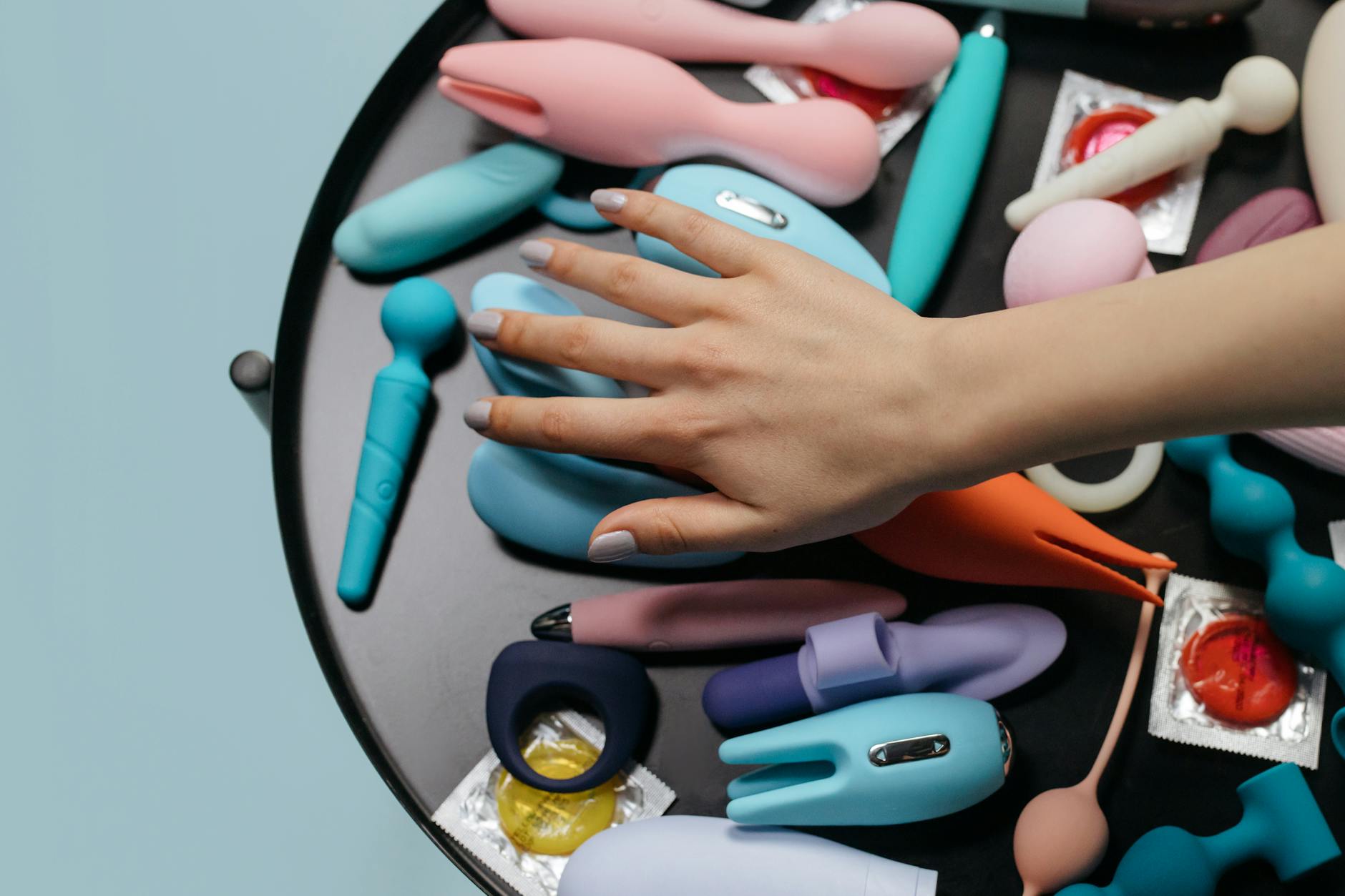
When you've spent years pleasing someone else, solo sex feels foreign
Let's be real: after a long relationship ends, your body doesn't just return to baseline. You've spent months or years calibrating your pleasure around someone else's rhythm, preferences, and schedule. You've learned to orgasm on someone else's timeline. You've probably faked it at least once. And now, suddenly, you're alone with your own body and you're not entirely sure what to do with it.
That's not weakness. That's actually what happens neurologically when you're in a coupled dynamic for years. Your brain starts to treat partnered sex as the primary version of pleasure, and solo exploration becomes something you do between connections to another person, not something that matters on its own.
The good news: your capacity for pleasure hasn't gone anywhere. It's just been reorganized. And lemon clitoral vibrators are weirdly excellent at helping you find it again.
Why returning to solo pleasure is harder than you think
There are three reasons the transition back to solo sex feels disorienting, and none of them are about physical capability.
First, there's the mental framework. After years of partnered sex, your brain has filed solo sex under "solo.". It's not seen as "real" sex in the same way. So when you're alone, you're fighting a psychological weight that says this is less significant, less important, less worthy of your attention. That weight is completely arbitrary. But it's real.
Second, there's the pleasure expectation gap. With a partner, someone else was driving the intensity and duration. You had a clear endpoint. You could let your mind wander. Now you're both the initiator and the recipient, and that dual role requires a different kind of presence. Some people find that easier. Most people find it harder at first.
Third, there's grief. Grief over the relationship, sure, but also grief over the routine. Sex with the same person year after year develops its own rhythm and comfort. You knew what to expect. Now you don't. That's disorienting even when you're excited to be single.
Lemon vibrators matter here because they externalize the intensity and pressure. You're not trying to make yourself come. The toy is doing that work. You're just present with sensation.
The three ways lemon vibrators help solo sex feel less performative
They remove the pressure to "make it work." When you're partnered, orgasm often feels like part of the contract. With a lemon clitoral vibrator, you can explore without a goal. The suction pattern does the heavy lifting. You're not performing the fantasy of arousal. You're just experiencing what's actually there.
They provide external validation that pleasure is happening. This sounds strange, but it matters. After years of partnered sex where someone else desired you, solo sex can feel lonely or self-indulgent. A toy creates a different psychic frame: something external is engaging with you. It makes the experience feel less guilt-adjacent, more legitimate.
They slow down arousal in a useful way. A partner can escalate intensity quickly. A lemon vibrator in your own hands lets you control pace completely. This is especially helpful if you've been moving through life on autopilot. Slowing down your solo practice actually reconnects you to your body's signals. You notice where you want more sensation. You notice what patterns work. You relearn your own pleasure vocabulary.
How to use a lemon vibrator when you're starting from a disconnected place
If you haven't had solo sex in months or years, jumping straight to intensity won't help. Here's a more useful framework.
Week one: exploration without orgasm. Use the lemon vibrator on its lowest setting, but don't aim for orgasm. Move it around. Notice which areas feel electric and which feel numb. Some people find their external clitoris is the obvious hotspot. Others discover that sensation is wider, spread across the entire vulva. You're mapping, not targeting.
Week two: introduce rhythm. Still low intensity, but now stay in one area and notice whether you prefer steady sensation or patterns. The Lem by My Lem Toy has multiple patterns for exactly this reason. You're learning your preference, not your partner's.
Week three and beyond: permission to escalate. Once you've spent two weeks reacquainting yourself with your own nervous system, your body will actually signal what it wants. That's when higher intensities make sense. But the first few weeks aren't about chasing orgasm. They're about learning the map.
The psychological shift that actually changes things
Here's the most important part that almost no one mentions: rediscovering solo pleasure after a long relationship requires a shift in how you think about your body.
During a relationship, your body is partly yours and partly the shared property of the couple. That's not unusual. It's actually neurologically normal. But it also means that post-relationship, you have to reclaim ownership. Your body is fully yours. Your pleasure serves only you. No one else's satisfaction is on the table. This is actually radically different from how your nervous system has been organized.
Using a lemon vibrator in this context isn't just physical exploration. It's a practice in reclaiming agency. Every time you use it, you're saying: this is my body, this is my time, this is my pleasure and no one else's. That sounds simple. It's not. It's revolutionary.
The timeline is real, and it varies wildly
I've worked with people who fall back into solo pleasure within weeks of a breakup. I've also worked with people who take six months to feel comfortable exploring again. Both timelines are fine.
The length of the relationship matters. The quality of the breakup matters. Your past relationship to solo sex matters. Your current emotional state matters. There's no universal timeline. But there IS something useful to know: each time you practice, you're rewiring the neural pathways that got reorganized during your partnership.
Lemon vibrators speed that rewiring up because they give your nervous system clear, uncomplicated sensation. You're not managing anyone else's pleasure. You're not wondering if you're taking too long. You're just receiving stimulus and responding to it. That's pure, uncomplicated self-pleasure. And it's remarkably healing.
When to consider talking to someone about this
If weeks of solo exploration aren't building any sensation or desire, and you're feeling genuinely numb, that's worth checking in with a therapist about. Post-relationship numbness is real, and it's usually emotional, not physical. A therapist who specializes in relationships and trauma can help you process the relationship in a way that frees up arousal.
Similarly, if you find yourself using solo sex as a way to self-soothe or avoid emotional processing, that's not a lemon vibrator problem. That's a deeper pattern worth examining. There's a difference between using pleasure as part of reconnection and using it as anesthesia.
But if you're exploring, rediscovering, and slowly building sensation back? That's the work. And it's worth doing.
How solo pleasure fits back into your life
Here's something no relationship advice column will tell you: rediscovering solo sex after a long partnership is actually one of the most important things you can do for your next relationship.
When you know your own body, your own patterns, your own pleasure, you show up differently in partnered sex. You can actually communicate what feels good instead of defaulting to someone else's preferences. You know the difference between desire and compliance. You have a baseline for what "good" feels like. That clarity is gold in any future relationship.
Using a lemon clitoral vibrator through this transition isn't avoidance of partnership. It's actually preparation for healthier partnership later. You're building a relationship with your own pleasure first. Everything else follows from there.
People also ask
How long after a breakup should you wait before using toys?
There's no rule here. Some people want to explore immediately after a breakup as a way of claiming independence. Others need space to grieve before pleasure feels good. Both are fine. The only timing that matters is when it actually appeals to you, not when you think you "should" be ready.
Can using a lemon vibrator alone make breakup recovery faster?
Not exactly. Solo pleasure can speed up reconnection with your body, which is one component of healing. But emotional recovery happens at its own pace. What the vibrator does is help you remember that pleasure exists independent of partnership. That's psychologically significant, but it's not therapy by itself.
Is it normal to feel guilty about solo sex after a long relationship?
Yes, intensely normal. During long partnerships, solo sex often gets framed as "not as good as the real thing." You've probably internalized that. But guilt usually fades as you practice and remember that solo pleasure is a complete experience, not a consolation prize. A lemon vibrator helps normalize this because it makes solo sex feel intentional and worthy of the same attention you'd give partnered sex.
What if I can't orgasm solo even with a vibrator?
Orgasm isn't the point in early exploration. I know that sounds counterintuitive. But if you're chasing orgasm as validation that you're "doing it right," you'll create pressure. The goal is sensation, connection to your body, and presence. Orgasm usually follows once you remove the performance aspect. If weeks of exploring aren't building toward sensation at all, that's the time to talk with a therapist or doctor.
Should I tell future partners that I use toys?
Yes, eventually. Not on the first date. But once you're considering partnered sex with someone new, they deserve to know you have a practice and that you know your body. This actually makes partnered sex better because you can guide them. Partners who feel threatened by your solo practice or your vibrator often have their own insecurities worth examining before you get deeper involved.
Can a lemon vibrator really change how solo sex feels?
It can change the experience, which can change your relationship to it. A different sensation pattern, a different intensity level, a different tool altogether. These things matter psychologically because they externalize the pressure and make the experience feel fresher, less like a habit. But the real shift happens in how you think about your body and your pleasure. The vibrator is the vehicle, not the destination.
The short version
After years of partnered sex, your nervous system has learned that pleasure is something you share. Returning to solo sex means retraining that system to understand pleasure as something that belongs to you completely. Lemon vibrators matter because they externalize intensity, remove performance pressure, and make solo exploration feel intentional and worthy.
Your body hasn't forgotten how to feel good. It's just been reorganized. Give yourself permission to spend a few weeks or months relearning. There's no rush. And every time you practice, you're not just experiencing pleasure. You're reclaiming your body as entirely your own.